HVAC Service Winter Park FL
Winter Park's housing stock ranges from 1920s homes near Park Avenue and Rollins to mid-century ranches, lakefront properties on the Chain of Lakes, and substantial newer construction. The HVAC challenges differ sharply between them, which is why a generic checklist is not much use here.
HVAC service in Winter Park includes AC repair, HVAC maintenance and replacement planning, including considerations common to older properties where duct routing and equipment placement require more thought than a standard changeout.
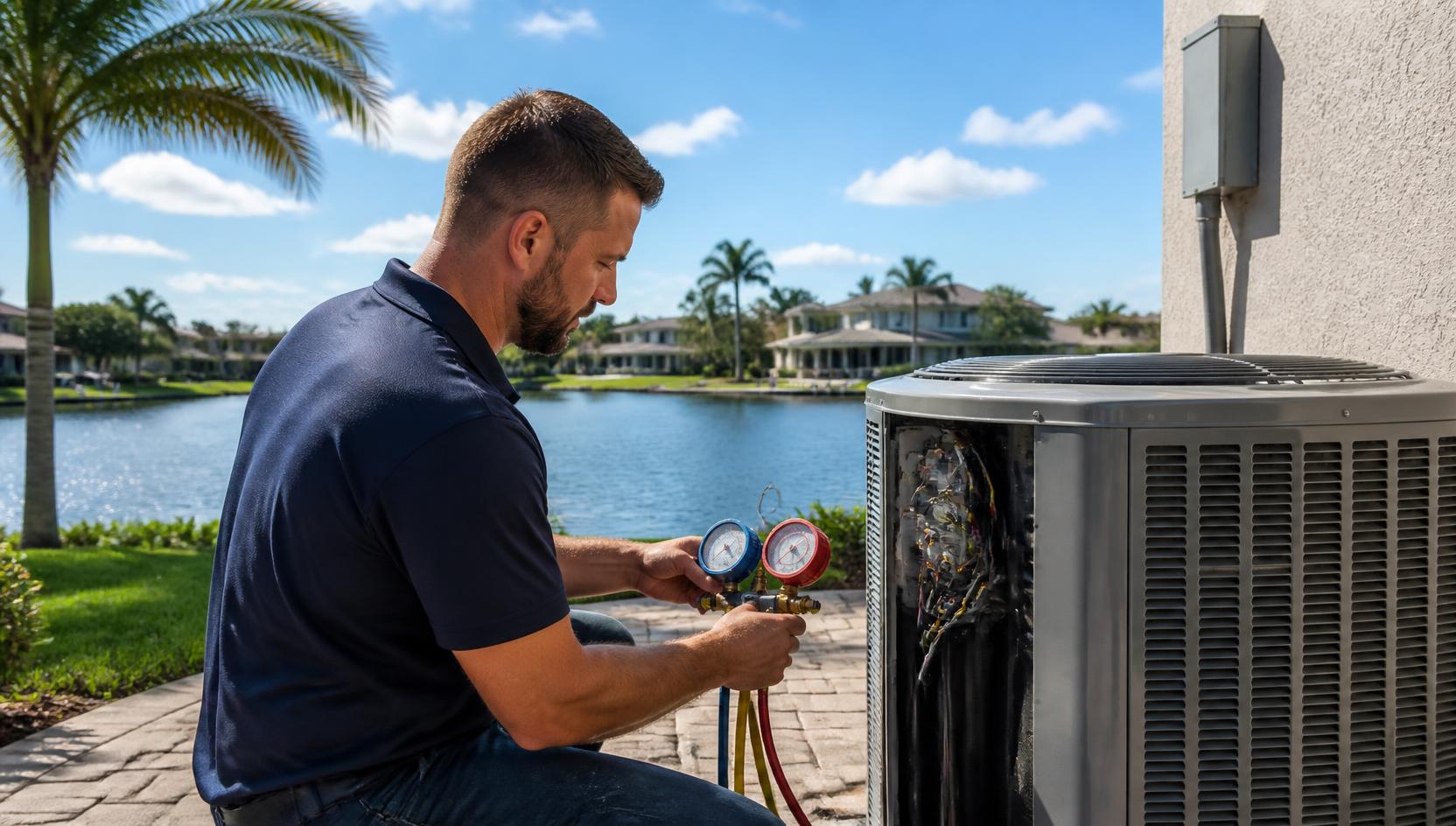
HVAC services available in Winter Park
Planning a budget? The Orlando HVAC cost guide explains what drives repair and replacement pricing.
Housing types and system considerations
1920s–1940s homes
Plaster walls, limited chase space, and duct systems added decades after construction. Undersized returns and long, restrictive runs are the norm, and comfort often improves more from duct work than from new equipment.
Mid-century ranches
Slab-on-grade with attic ducts, frequently on their second or third HVAC system. Attic duct insulation is often past its useful life.
Lakefront and mature-canopy properties
Heavy tree cover reduces solar gain but drops leaves and debris onto condensers and encourages moisture retention around outdoor units.
Newer and renovated homes
Tighter envelopes and larger glazing areas; better insulated but more sensitive to oversizing and humidity control.
AC repair in Winter Park
Under the tree canopy, condenser coils foul faster with leaf litter, pollen and organic debris, which raises head pressure and stresses compressors and capacitors. A large share of Winter Park no-cooling calls trace back to heat rejection problems at the outdoor unit rather than anything inside.
In older homes, the second recurring theme is airflow. A restricted return or a collapsed attic run reduces capacity, causes coil freezing, and produces symptoms that look exactly like a refrigerant problem until static pressure and temperature split are measured.
HVAC maintenance for Winter Park homes
Condenser clearance deserves particular attention here. Mature landscaping and privacy hedges commonly crowd outdoor units to the point of recirculating their own hot discharge air. Two feet of clear space on all sides and open space above makes a measurable difference.
The condensate system is the other priority. Long attic drain runs in older homes tend to sag, hold water and clog; the resulting overflow damages plaster ceilings that are expensive to repair properly.
Installation and replacement
Replacements in historic Winter Park homes often involve equipment placement constraints, tight attic access, and duct systems that need modification to support modern airflow. Where the exterior of a home matters — and around Park Avenue and the older streets it usually does — condenser placement and line-set routing get planned rather than improvised.
For larger homes, zoning or multiple systems frequently make more sense than one oversized unit trying to condition rooms with very different loads.
Climate factors that shape Winter Park systems
Shade from mature oaks cuts afternoon solar gain, which sounds purely positive but has a side effect: a shaded house has a lower sensible load, so a system sized as though it were in full sun will short cycle and leave the house humid. Right-sizing matters more here than in an open subdivision.
Lakefront exposure adds humidity and, on windy days, debris. Both argue for attention to outdoor unit condition and to dehumidification performance rather than raw tonnage.
Winter Park HVAC questions
Why does my Winter Park home feel humid even when it is cool?
Can HVAC be updated in an older Winter Park home without major renovation?
How often should I clean around my outdoor unit?
Do you handle larger homes with multiple systems?
Nearby service areas
Need HVAC service in Winter Park?
Tell us what your heating or cooling system is doing and request service.