Heating Repair Orlando FL
Orlando does not have a northern heating season, and pretending otherwise leads to bad advice. What we do have is a handful of cold fronts each winter where overnight lows drop into the 30s and 40s — and that is precisely when a heating fault that went unnoticed for eleven months becomes obvious.
Most local heating equipment is either a heat pump (which reverses the cooling cycle) or electric resistance strip heat inside the air handler. Gas furnaces exist here but are far less common. Each fails in different ways, so diagnosis starts with identifying what you actually have.
Common heating complaints in Central Florida
Air from the vents feels cool during heating
A heat pump delivers supply air that is warm but noticeably cooler than a furnace — often in the 90s°F. That is normal. Air that is genuinely room-temperature or cooler is not, and may indicate a reversing valve, defrost, refrigerant or control fault.
Nothing happens on a heat call
Control board, thermostat wiring, sequencer, contactor or limit-switch faults commonly prevent the heat side from energizing while cooling still works fine.
Burning smell on first use
Dust burning off strip heat elements after months idle is common and brief. A persistent burning or electrical smell is not, and the system should be shut off and inspected.
Breaker trips when heat runs
Electric strip heat draws heavily. Repeated tripping suggests element, sequencer, wiring or breaker problems and should not be reset repeatedly.
Heat runs constantly
Auxiliary heat energizing when it should not, a thermostat configured for the wrong equipment type, or a heat pump that has lost heating capacity are the usual causes — and it shows up quickly on the power bill.
Outdoor unit is iced during cold weather
Some frost on a heat pump in cold, damp conditions is normal and cleared by the defrost cycle. Persistent heavy ice indicates a defrost control, sensor or refrigerant problem.
How heating systems work here
A heat pump moves heat from outdoor air into the house. Even at 40°F there is usable heat outdoors, which is why heat pumps suit this climate well. When outdoor temperatures drop far enough, or on rapid recovery from a setback, auxiliary electric heat supplements the heat pump — effective but considerably more expensive to run.
Straight electric heat systems have no heat pump at all: resistance elements warm the air directly. They are simple and reliable but the least efficient option, which is why an aging strip-heat system is often replaced with a heat pump.
What a heating diagnosis involves
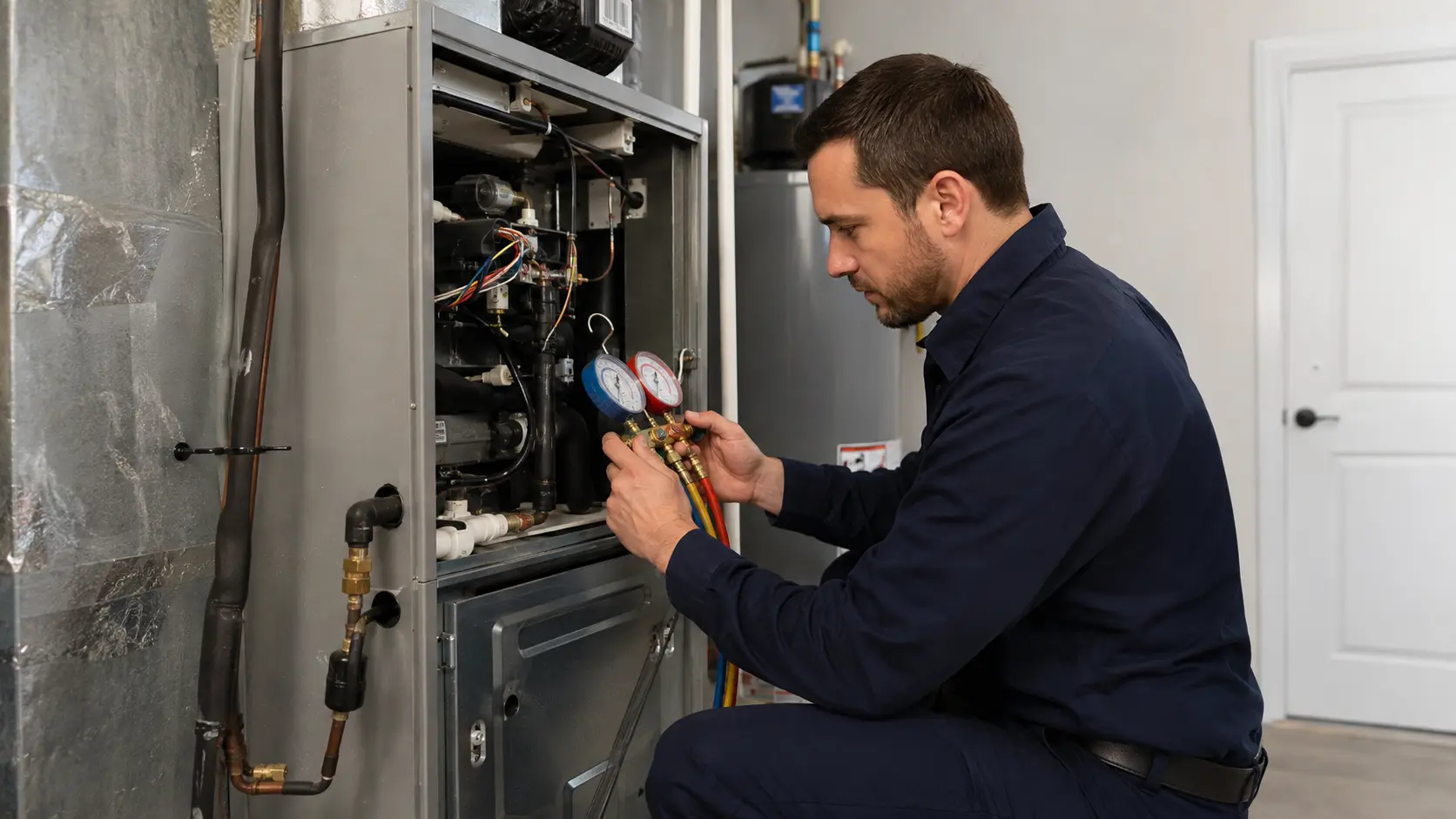
The technician confirms the equipment type, verifies the thermostat is calling correctly and configured for that equipment, checks that the indoor blower and airflow are adequate, measures the temperature rise across the coil or elements, and then evaluates the specific components involved — sequencers and elements on strip heat; reversing valve, defrost board, sensors and refrigerant performance on a heat pump.
Thermostat configuration deserves particular attention on heat pumps. A control set up as conventional rather than heat pump, or with an aggressive auxiliary-heat lockout setting, produces high bills and comfort complaints without any hardware fault at all.
Before winter arrives
Run the heat for fifteen minutes on a mild day in the fall. Confirm the air warms, that no breaker trips, and that nothing smells beyond a brief dust burn-off. Finding a fault in November is far easier than discovering it during the first 38°F night in January when demand spikes across the region.
Heating Repair questions Orlando homeowners ask
Why does my heat pump blow air that does not feel hot?
Why is my electric bill so high in a cold week?
Should I use Emergency Heat mode?
Do Orlando homes need heating maintenance?
More questions are answered on our Orlando HVAC FAQ and in the HVAC cost guide.
Need HVAC Service in Orlando?
Tell us what your heating or cooling system is doing and request service.