
AC Repair Orlando FL
If your air conditioner is running but the air from the vents is not cold, the cause is usually one of a short list: a restricted filter or coil, a thermostat or control problem, a refrigerant-circuit issue, or a failed electrical component such as a capacitor or contactor. A repair visit should start with diagnosis — measuring temperature split, airflow, and electrical values — before any part is replaced.
AC repair in Orlando is mostly about run hours. Systems here operate for a large part of the year, so wear items fail sooner than they would in a cooler climate, and small problems (a partly clogged drain, a dirty condenser coil) escalate quickly during a stretch of high heat.
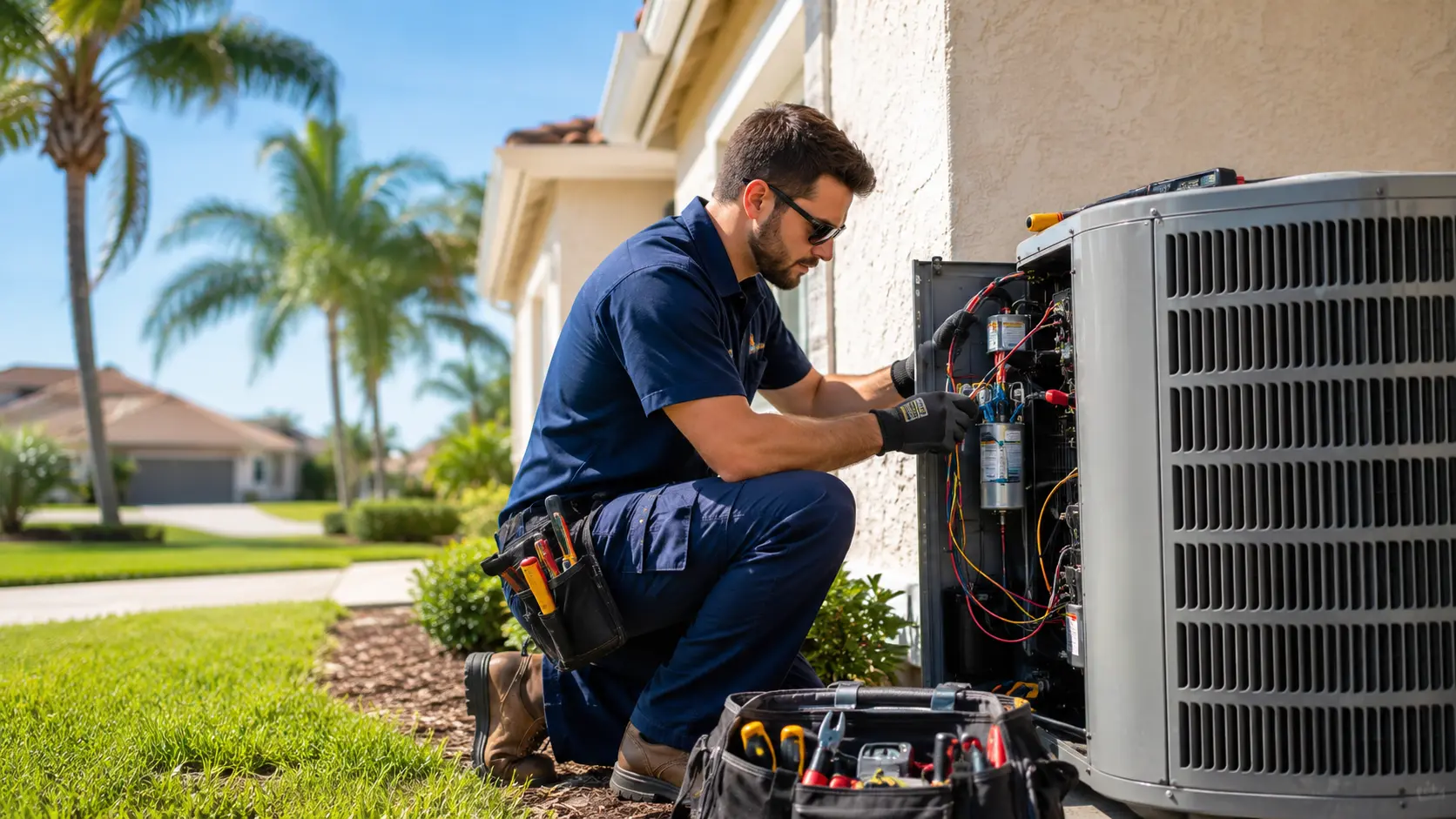
Symptoms we diagnose most often
AC blowing warm air
The blower runs but supply air is close to room temperature. Common contributors include a tripped outdoor disconnect or breaker, a failed run capacitor stopping the compressor or condenser fan, low refrigerant charge from a leak, a thermostat set to FAN ON rather than AUTO, or an iced indoor coil blocking heat transfer.
Weak airflow from the vents
Restricted filters, a dirty evaporator coil, a failing blower motor or capacitor, crushed or disconnected flex duct in the attic, and closed or blocked returns all reduce delivered air. Low airflow also drives coil freezing, so it is worth correcting early.
Short cycling
The system starts and stops after a few minutes. Causes range from a thermostat located in a hot or drafty spot, to a dirty condenser coil raising head pressure, to a refrigerant charge problem, to an oversized system that satisfies temperature before it removes humidity.
The system runs constantly and never satisfies
On the hottest Orlando afternoons long run times are normal. Continuous operation with a rising indoor temperature is not, and usually points to reduced capacity: coil fouling, airflow restriction, refrigerant loss, duct leakage into a hot attic, or a compressor that is no longer pumping effectively.
Frozen evaporator coil or refrigerant line
Ice on the copper suction line or inside the air handler is a symptom, not a diagnosis. Turn cooling off, leave the fan running to thaw the coil, and have the underlying cause — airflow restriction or low charge — identified. Running a frozen system risks liquid refrigerant reaching the compressor.
Water near the indoor unit
In Florida a condensate drain removes a large volume of water every day. Biological growth in the line, a full or failed drain pan, a clogged trap, or a float switch that has tripped will show up as water stains, a shut-down system, or overflow near the air handler.
Unusual noises
A hard hum with no fan movement can indicate a failed capacitor or seized motor. Grinding, rattling, screeching or repeated clicking at start-up all point to specific mechanical or electrical faults and should be investigated rather than ignored.
High indoor humidity
A house that feels clammy at 75°F is usually not dehumidifying well. Short run cycles, oversized equipment, excessive outdoor-air infiltration through leaky return ducts, or a coil that is not staying cold enough are the usual suspects.
What an AC repair evaluation typically involves
A useful diagnosis follows the evidence rather than guessing at parts. Typical steps include confirming thermostat operation and call for cooling, checking filter and return condition, measuring supply and return temperatures, inspecting the indoor coil and drain, checking the outdoor unit for power at the disconnect, verifying capacitor and contactor condition, examining the condenser coil for dirt and debris, and — where the symptoms indicate a refrigerant-circuit problem — taking pressure and temperature readings to evaluate charge and system performance.
The result should be an explanation of what failed, what it will take to correct it, and whether the repair makes sense given the age and condition of the equipment. If a refrigerant leak is found, the sensible next question is where it is leaking and whether that component can be repaired, not simply how much refrigerant to add.
Repair or replace?
Repair generally makes sense on a system that is under roughly ten years old, has no history of repeated failures, and needs a discrete component such as a capacitor, contactor, blower motor, control board or drain-related part.
Replacement deserves serious consideration when the system is 12–15+ years old, uses R-22, has a compressor or coil failure, or has needed multiple repairs in consecutive seasons. In those cases it is worth comparing the repair cost against a replacement that also corrects sizing, airflow and efficiency problems. Our
Safety notes before service
If you smell burning, see scorched wiring, notice water pooling around electrical components, or hear a loud mechanical noise from the outdoor unit, switch the system off at the thermostat and, if it is safe to reach, at the breaker. Do not open energized electrical compartments, discharge capacitors, or attempt refrigerant work — those tasks require training, tools and EPA certification.
Homeowner-safe steps are limited and worth trying first: replace a dirty filter, confirm the thermostat is set to COOL with a temperature below the room reading, check that the breaker and outdoor disconnect are on, and clear leaves or shrubs crowding the outdoor condenser.
AC Repair questions Orlando homeowners ask
Why is my AC running but not cooling?
Should I keep running the AC while I wait for repair?
How long does an AC repair take?
Is a refrigerant top-up a real repair?
More questions are answered on our Orlando HVAC FAQ and in the HVAC cost guide.
Need HVAC Service in Orlando?
Tell us what your heating or cooling system is doing and request service.