
HVAC Service College Park Orlando
College Park is largely a neighbourhood of 1920s–1950s homes on compact lots, with a steady stream of renovations and additions. That combination — original structure plus decades of modifications — produces HVAC systems that rarely match what the house actually needs today.
Airflow deserves particular attention in College Park homes: additions served by a duct branch that was never resized, closet air handlers with barely adequate returns, and attic runs that have been reworked more than once.
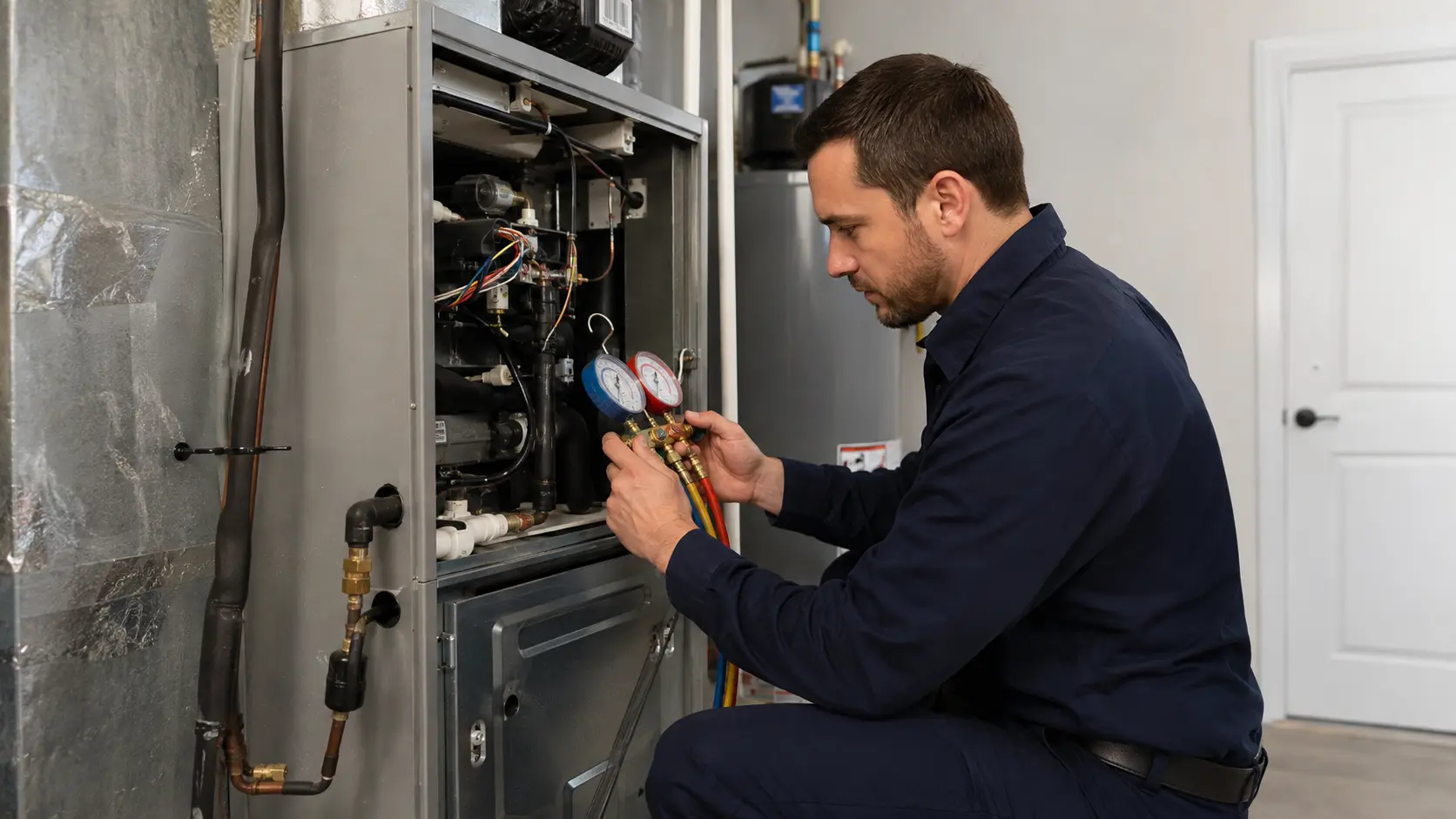
HVAC services available in College Park
Planning a budget? The Orlando HVAC cost guide explains what drives repair and replacement pricing.
Why airflow is the recurring theme in College Park
When a bungalow gains a rear addition or a converted garage, the cooling load increases but the duct system usually does not. A single branch is extended to serve the new space, the return stays where it always was, and the result is a room that never cools and a system that runs longer than it should.
Small houses also mean small mechanical spaces. Air handlers tucked into hall closets frequently have return grilles that are undersized for modern equipment airflow, which raises static pressure, increases noise, and reduces capacity across the whole house.
Common AC repair issues in College Park
Frozen evaporator coils
Often the downstream result of restricted returns or a filter left in place too long, rather than a refrigerant fault.
Condensate overflow in tight closets
Limited slope on primary drains and cramped secondary pans make drain maintenance essential.
Capacitor and contactor failures
Long summer run hours on older equipment, made worse by storm-season voltage disturbances.
Uneven room temperatures
Additions, enclosed porches and converted spaces on branches that cannot deliver enough air.
Noisy operation
High velocity through undersized ducts in compact homes, transmitted through the structure.
HVAC maintenance in older homes
In houses of this age, maintenance should include a look at the duct system, not just the equipment. Attic runs added in the 1980s or 1990s often have degraded insulation and sagging sections that hold water and restrict airflow.
Filter discipline matters more than average here because the systems are typically smaller and less tolerant of restriction. A one-inch filter in a compact return can load up in six weeks during pollen season.
Installation and replacement planning
A replacement in College Park is the practical opportunity to correct decades of accumulated compromise: right-size the equipment for the house as it exists now (including additions), add or enlarge the return, replace deteriorated attic duct, and place the outdoor unit where it has clearance on a narrow lot.
Lot size affects planning. Condensers squeezed between a house and a fence line, or against a neighbouring structure, recirculate discharge air and lose capacity. Placement and clearance are part of the design, not an afterthought.
Local climate factors
College Park's older homes generally have less insulation than newer construction and more envelope leakage, so they gain heat and humidity faster during the long Orlando cooling season. Attic temperatures drive both duct losses and ceiling heat gain.
Mature street trees provide useful afternoon shade but also drop debris on outdoor units year-round, so condenser cleaning belongs on the maintenance list.
College Park HVAC questions
Why does the addition on my College Park home never cool properly?
Is my old house too small for a modern high-efficiency system?
How do I stop my coil from freezing every summer?
Can you improve comfort without replacing the system?
Nearby service areas
Need HVAC service in College Park?
Tell us what your heating or cooling system is doing and request service.