HVAC Service Downtown Orlando FL
Downtown Orlando packs an unusual mix of building types into a small area: high-rise condos around Lake Eola, converted historic buildings, 1920s bungalows in the surrounding streets, mid-rise apartments, and ground-floor retail and office suites. Each of those brings a different HVAC configuration and a different set of access constraints.
HVAC service needs in Downtown Orlando include AC repair, HVAC maintenance, system replacement and light commercial service, along with practical considerations such as parking, elevator access and building-management requirements, which are best planned before a visit rather than discovered on arrival.
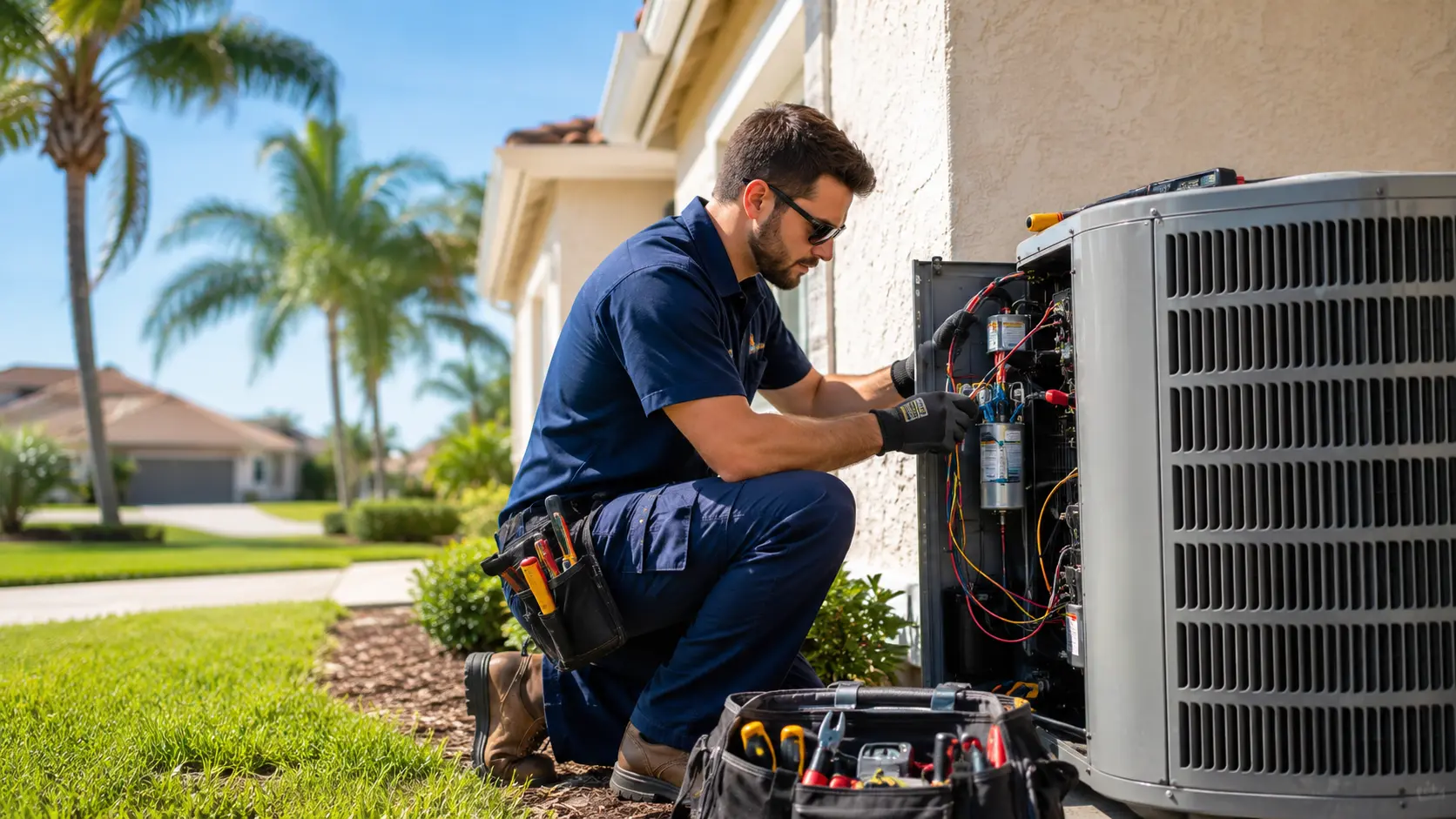
HVAC services available in Downtown Orlando
Planning a budget? The Orlando HVAC cost guide explains what drives repair and replacement pricing.
Downtown building types and their HVAC systems
High-rise condominiums
Typically compact air handlers in interior closets paired with condensers on balconies or a rooftop, or water-source heat pumps tied to a building loop. Space is tight, drainage routes are shared, and equipment changes usually require building approval.
Converted and historic buildings
Retrofitted duct systems threaded through original structure, often with undersized returns and limited chase space. Comfort complaints here are frequently distribution problems, not equipment problems.
Bungalows near Lake Eola and Thornton Park
Early-1900s homes with limited insulation, single-pane or replacement windows, and duct systems added later in tight attics.
Mid-rise apartments
Split systems with condensers on grade or roof-mounted, frequently with long line sets and shared condensate routing.
Ground-floor retail and office suites
Packaged rooftop units or split systems serving tenant spaces, where door traffic and glazing dominate the cooling load.
AC repair in Downtown Orlando
The most common downtown call is a system running with warm supply air, or one that has shut itself off. In condos and apartments, a tripped condensate float switch is a frequent cause — drain lines serving stacked units clog readily, and a protective shutdown is preferable to water reaching the unit below.
Other regulars are failed run capacitors, contactor problems, condenser fan motors, and coils fouled by street-level dust and debris. Diagnosis is the same discipline as anywhere: verify controls, check airflow and drainage, then measure the electrical and refrigerant sides.
HVAC maintenance for downtown properties
Condensate management is the priority in multi-family and stacked construction, because a drain failure downtown does not just affect one unit. Clearing lines, verifying traps, and testing float switches should be a routine part of service here.
Filter access is the second issue. Closet-mounted air handlers in condos often have small, awkward filter locations that get skipped for months, which starves airflow and freezes coils. Knowing the size and setting a reminder solves most of it.
Installation and replacement downtown
Replacement projects downtown are as much a logistics exercise as a mechanical one: equipment dimensions that fit an existing closet, elevator and stair access, approved work hours, roof or balcony access for the outdoor unit, and building management or HOA documentation.
Where equipment must fit an existing footprint, sizing and airflow still need to be verified rather than assumed. Historic and converted buildings often have duct systems that cannot carry the airflow a modern high-capacity system expects, so duct or return modifications may be part of the scope.
Local climate considerations
Downtown runs slightly warmer than the surrounding suburbs because of pavement and building mass holding heat into the evening — the urban heat island effect. Systems here often keep running well after sunset, which extends run hours beyond what the equipment nameplate assumes.
Add Central Florida humidity and a cooling season that stretches from March into November, and downtown equipment accumulates hours fast. Coil cleanliness, drain condition and electrical component health are the three things that most reliably prevent mid-summer failures.
Common downtown HVAC problems
Condensate shutdowns
Shared and long drain runs in stacked units clog and trip float switches.
Undersized returns
Retrofitted duct systems in older buildings restrict airflow and increase noise.
Hot west-facing rooms
Large glazing with afternoon exposure in condos and converted lofts creates load a central thermostat never sees.
Humidity in shoulder seasons
Mild spring and fall days mean short cooling cycles and poor moisture removal in tight units.
Outdoor unit access
Balcony and rooftop condensers restrict service clearance and airflow.
Downtown Orlando HVAC questions
Do you work on condo HVAC systems downtown?
Why does my downtown condo AC keep shutting off?
Can HVAC equipment be replaced in a high-rise unit?
Do you service downtown offices and retail spaces?
Nearby service areas
Need HVAC service in Downtown Orlando?
Tell us what your heating or cooling system is doing and request service.