HVAC Repair Orlando FL
HVAC repair covers the whole system, not just the cooling side: the air handler or furnace, the outdoor condenser or heat pump, the refrigerant circuit, the electrical and control components, the condensate system, and the ductwork that connects it all. Many comfort complaints in Orlando trace back to parts of that chain that never get inspected.
The value of a proper repair visit is in ordering the diagnosis correctly — establish what the system is actually doing, measure it, and only then decide what to replace.
What falls under HVAC repair
Air handler and blower
Blower motors, ECM modules, capacitors, wheel imbalance and airflow faults that show up as weak vents, noise or high energy use.
Outdoor unit
Contactors, capacitors, condenser fan motors, compressor electrical faults, coil fouling and refrigerant-circuit problems.
Controls and electrical
Thermostats, control boards, transformers, low-voltage wiring faults, float switches and safety devices that shut the system down.
Condensate system
Clogged drain lines, failed traps, overflowing pans and tripped float switches — one of the most frequent causes of no-cooling calls in Florida.
Heat side
Heat pump reversing valves, defrost boards, auxiliary electric heat elements and sequencers, and gas furnace components where present.
Distribution
Duct leakage, disconnected runs, collapsed flex and register problems that make some rooms uncomfortable regardless of equipment condition.
Symptoms that point beyond the AC itself
Uneven temperatures between rooms usually indicate a distribution problem rather than a failing condenser. A system that shuts off on its own and restarts later often has a safety device doing its job — a float switch, a high-pressure control or a limit — which means the real fault is upstream of the symptom.
Rising energy use with no change in habits is worth investigating too. Fouled coils, duct leakage into the attic, a failing capacitor forcing hard starts, or auxiliary heat energizing when it should not can all raise consumption before they cause an outright failure.
How diagnosis proceeds
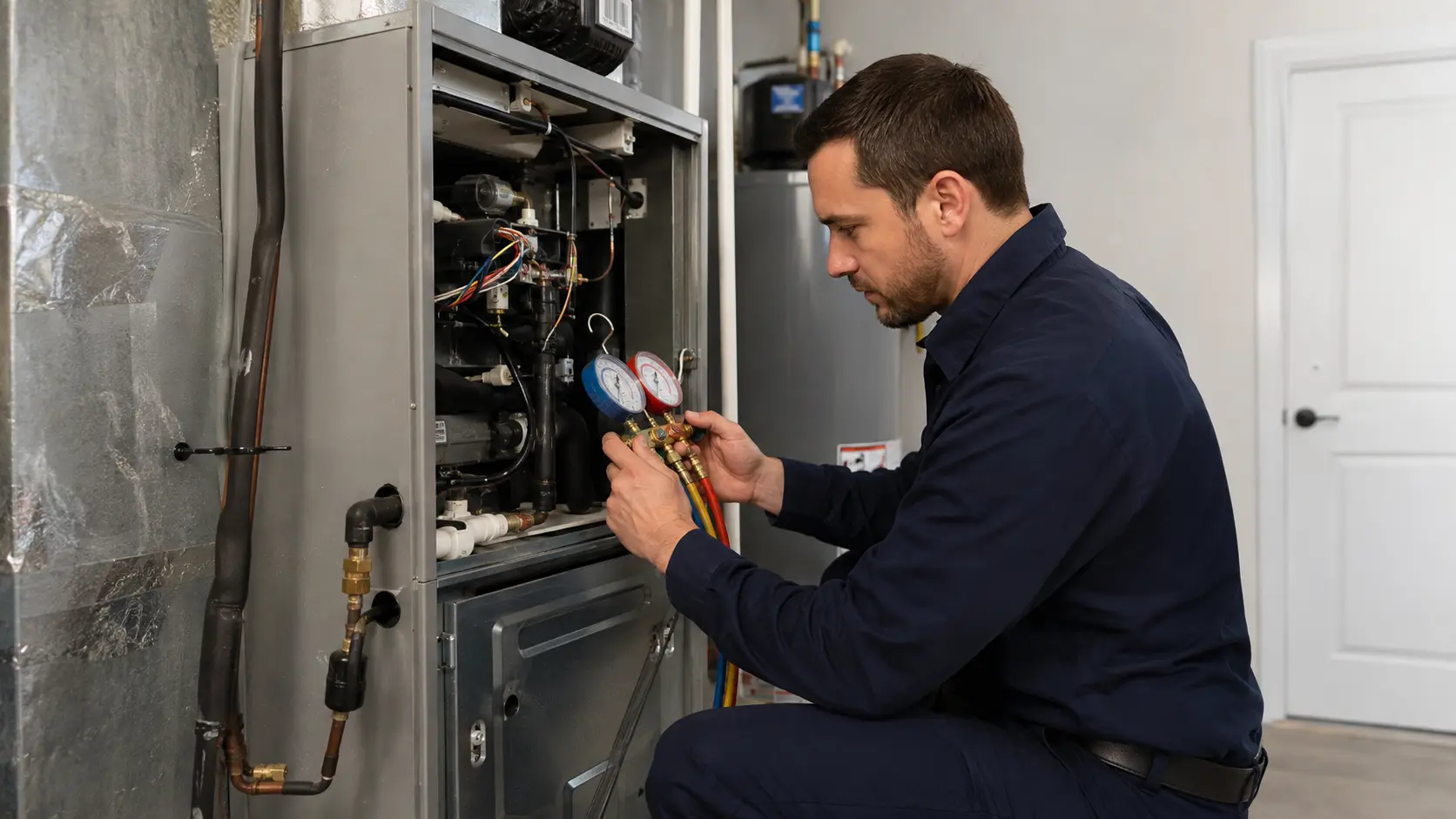
A technician should verify the complaint, confirm control operation, inspect filters and returns, measure temperature differential across the coil, check static pressure where airflow is suspect, inspect the drain and safety switches, and then evaluate the electrical and refrigerant sides based on what the earlier readings indicate.
Documenting readings matters. If a system is repaired twice for related symptoms, prior measurements make the pattern obvious — a slow refrigerant leak, for example, looks very different from an intermittent electrical fault.
Repeat failures and system condition
Two unrelated component failures in a season is normal wear on an older system. The same failure repeating usually means the root cause was not addressed: a capacitor that fails twice may be reacting to a hard-starting compressor or high head pressure from a dirty coil.
When a system reaches the point of needing a compressor, evaporator coil or multiple major components, comparing repair cost against replacement is reasonable — especially for equipment older than about 12 years or using discontinued refrigerant.
HVAC Repair questions Orlando homeowners ask
What is the difference between AC repair and HVAC repair?
My system shut itself off and then started again later. Why?
Can duct problems cause equipment failures?
Is it worth repairing a 15-year-old system?
More questions are answered on our Orlando HVAC FAQ and in the HVAC cost guide.
Need HVAC Service in Orlando?
Tell us what your heating or cooling system is doing and request service.