HVAC Installation Orlando FL
A complete HVAC installation replaces both halves of the system — the indoor air handler or furnace and the outdoor condenser or heat pump — as a matched set, along with the controls, condensate detail and any duct corrections the house needs. Matching matters: pairing a new outdoor unit to an old indoor coil rarely delivers the rated performance and can shorten equipment life.
This page covers whole-system replacement. If you are replacing cooling equipment only, see AC installation; if you are choosing a heat pump specifically, see heat pump installation.
When a whole-system replacement makes sense
Both halves are the same age
When indoor and outdoor equipment were installed together and are 12–15+ years old, replacing one half typically leaves a mismatched, lower-performing system.
Refrigerant change
Older systems using discontinued refrigerants cannot simply be paired with current equipment; the indoor coil and often the line set need to change too.
Compressor or coil failure
The two most expensive components. When either fails on aging equipment, replacement usually competes well on cost.
Chronic comfort problems
Humidity complaints, hot rooms and short cycling often stem from sizing and distribution, which can be corrected during a planned replacement.
Rising energy use
Efficiency losses accumulate across coils, motors and duct leakage. A replacement project is the practical moment to address all three.
Planning the system
Start with a load calculation based on the building, not the nameplate of the outgoing unit. Orlando homes vary widely — 1920s bungalows in College Park, block ranch homes from the 1970s, and 2010s construction in Lake Nona all behave differently under the same August sun.
Next comes equipment configuration: single-stage, two-stage or variable-speed; heat pump or straight cool with electric heat; standard or high-efficiency air handler. Then distribution — return capacity, duct sizing, insulation condition and static pressure — and finally controls, including whether a smart thermostat can properly manage the staging and auxiliary heat of the selected system.
The installation itself
Recovery and removal
Refrigerant recovered per EPA requirements; old equipment removed and disposed of.
Indoor work
Air handler set level with proper support, secondary drain pan where required, sealed plenum connections and accessible filter arrangement.
Outdoor work
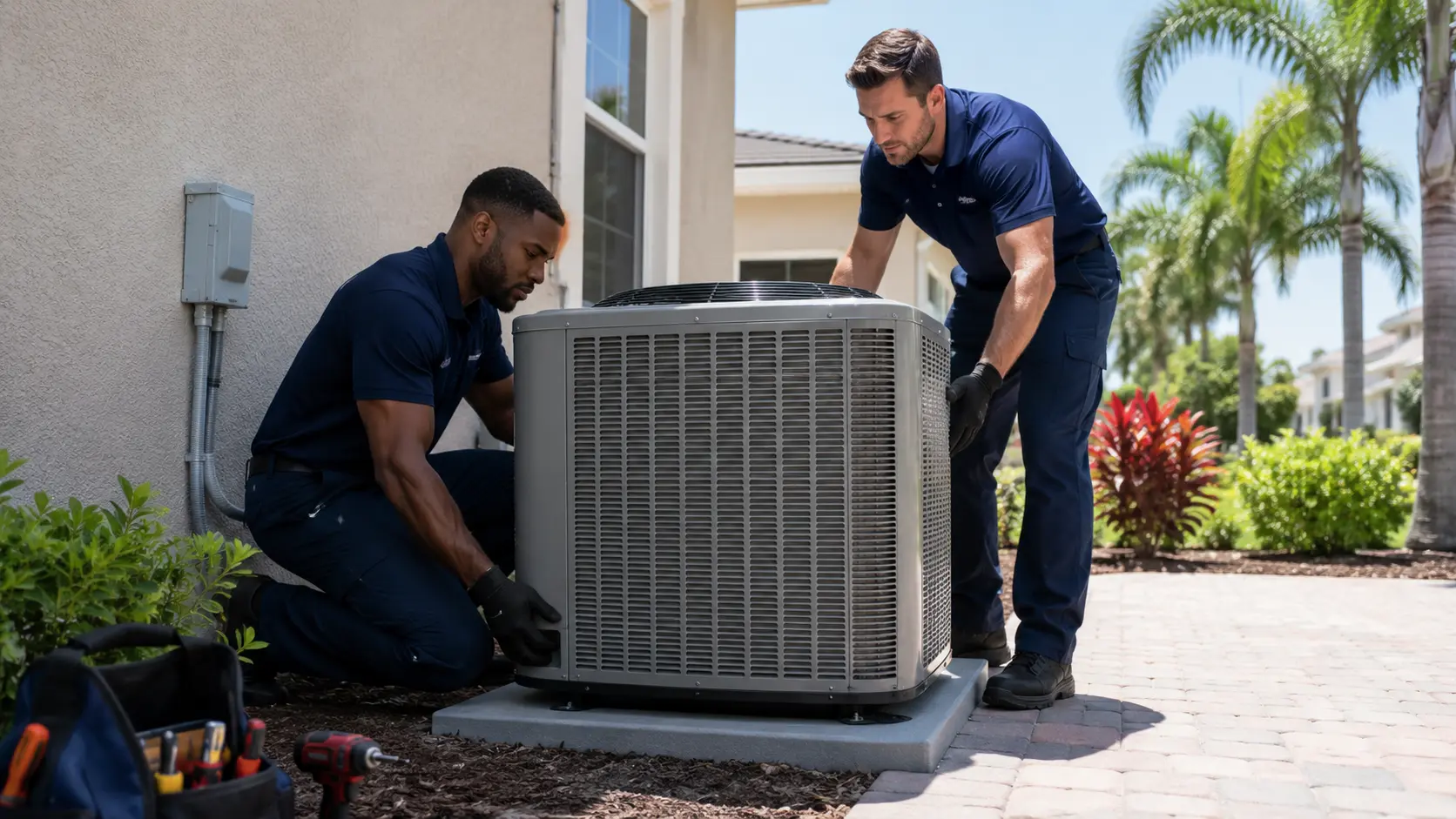
Condenser mounted level on an appropriate pad with clearance for airflow and service, electrical disconnect verified, and whip and grounding correct.
Refrigerant piping
Line set evaluated, brazed with nitrogen purge, pressure tested and evacuated to a deep vacuum before charging.
Condensate
Correctly sloped primary drain with trap, secondary protection and a tested float switch — critical in a climate that produces condensate nearly year-round.
Commissioning
Airflow set, charge verified by measurement, controls configured, and operating data recorded and explained to the homeowner.
Permits, inspection and documentation
Equipment changeouts in the Orlando area require permitting and inspection. Beyond code compliance, permitted work creates a record that supports warranty claims and matters at resale.
Keep the paperwork: model and serial numbers, registration for manufacturer warranty coverage, and the commissioning readings. If a performance question comes up two summers later, that data is what makes it answerable.
Orlando-specific installation considerations
Attic-installed air handlers are common here and deserve extra attention to secondary drainage, service access and duct insulation, because an attic in July is a punishing environment. Outdoor units should be elevated adequately and secured with storm season in mind.
Humidity control should be an explicit design goal rather than an afterthought. Right-sized equipment with longer run cycles, sealed return ducts, and controls that can manage fan operation will keep a house comfortable at a higher thermostat setting than an oversized system ever will.
HVAC Installation questions Orlando homeowners ask
Do I have to replace the indoor and outdoor units together?
Can ductwork be replaced at the same time?
How disruptive is the installation?
What affects the price of an installation?
More questions are answered on our Orlando HVAC FAQ and in the HVAC cost guide.
Need HVAC Service in Orlando?
Tell us what your heating or cooling system is doing and request service.